

The Doghouse
Three years on the Barossa campaign. Two breakdowns. One in the shower where nobody saw. One in the doghouse where everyone did.

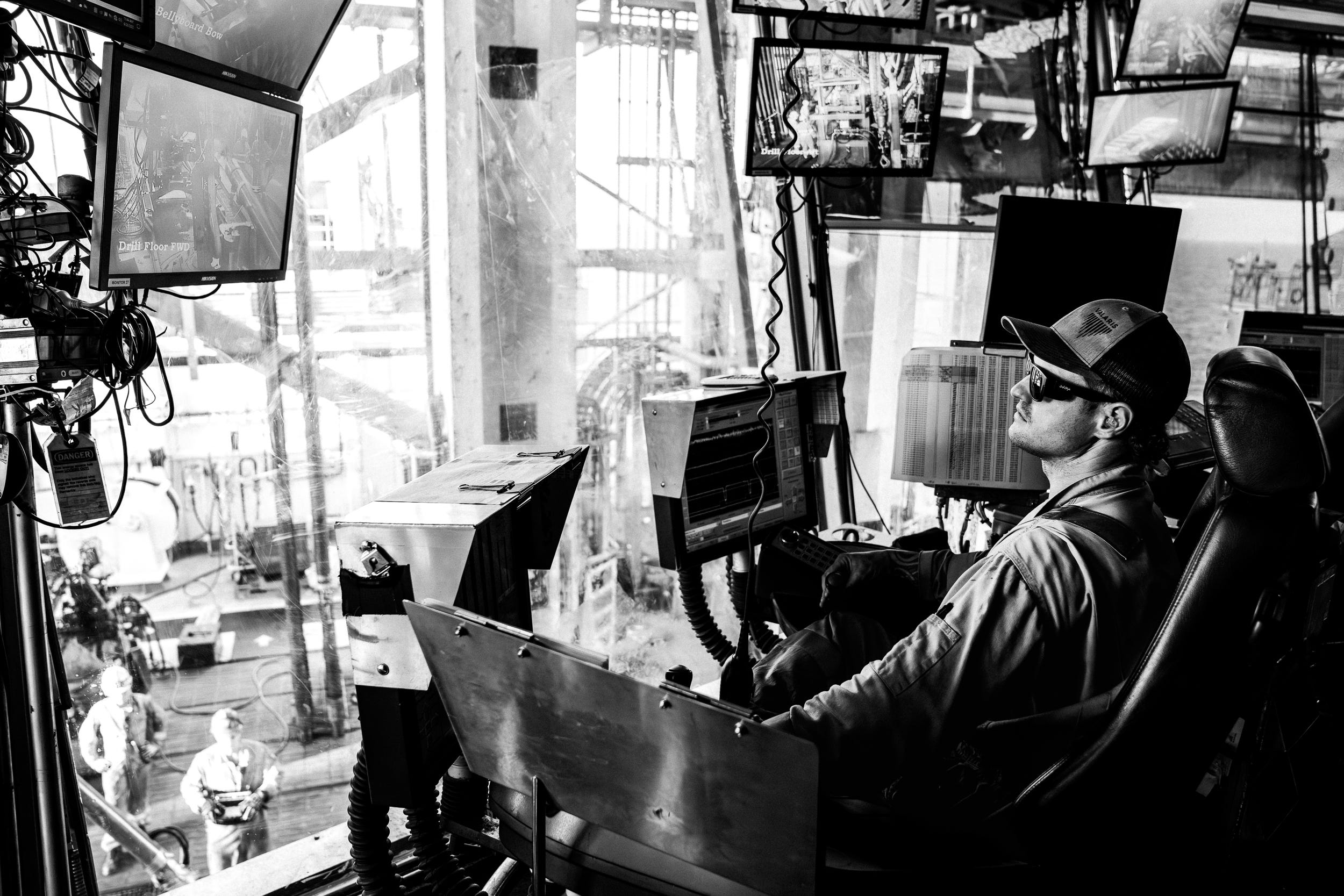
I need to tell you about Barossa.
I’ve been writing around it for months. Bits of it have bled into other pieces. The ego piece. The addiction piece. The supervision stuff. I’ve given you fragments, corners, half-truths told from a safe distance. But I haven’t given you the full story. And I think I owe you that. Not because it’s comfortable. Because everything I’ve written since comes from this.
This is where it broke.
To understand Barossa, you need to understand what came before it.
I was fired from Ocean Rig. My own fault. Regrettable, but not part of this story. What matters is that for the first time in my career, I was sitting at home with no job and no one to blame but myself. The industry is snakes and ladders. I’d hit a snake.
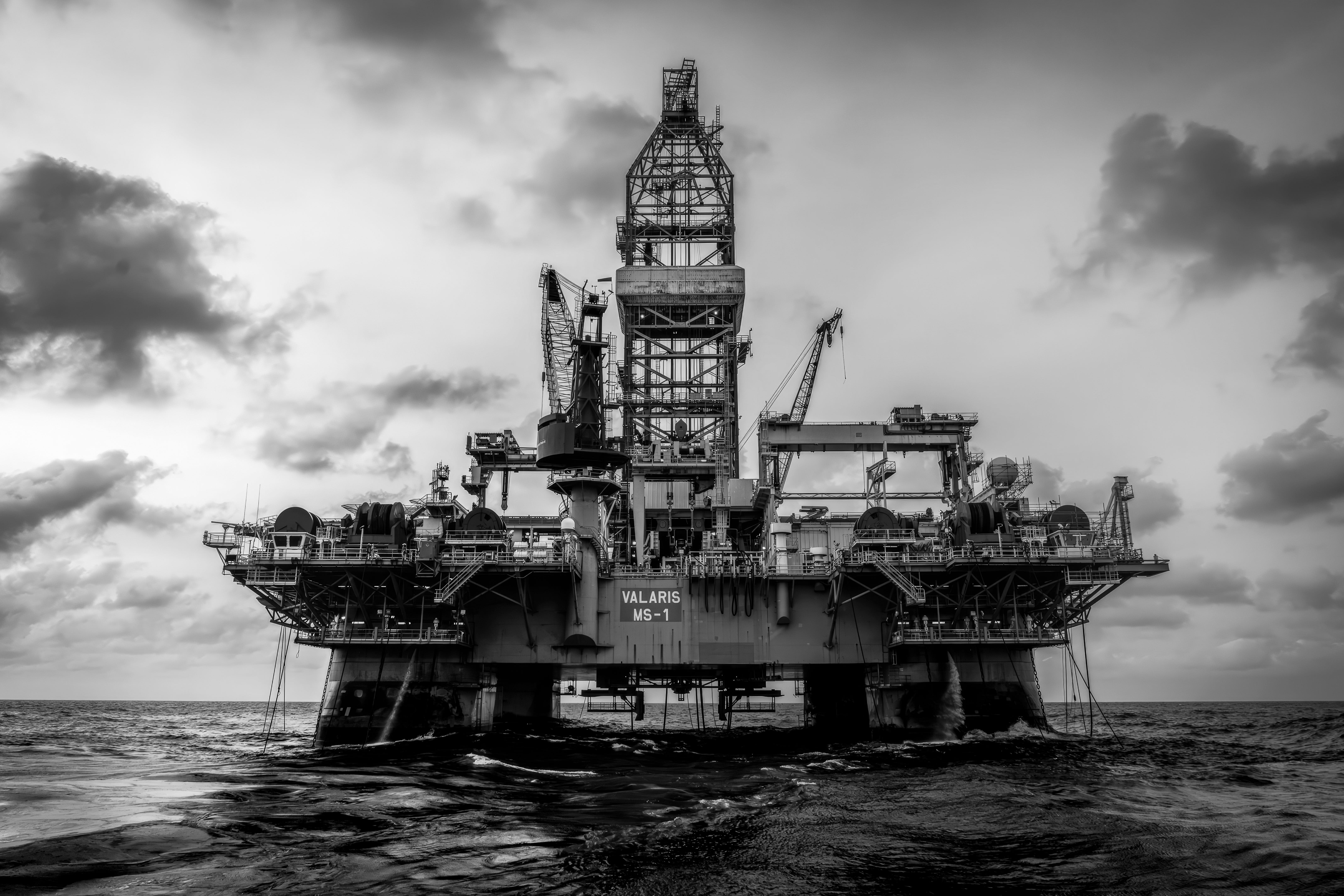
So when the MS-1 came down to Australia, and I landed an AD’s gig, I took it. You don’t get to be precious about positions when you’ve got kids and bills and no savings to fall back on. Ego gets shot out the window pretty quickly when your only other option is not working. There’s something freeing about that, actually. Having to go to work because there is no safety net. No million in savings. No investment portfolio. Just you and the chair and the fact that bills don’t stop.
We worked the northwest shelf for about a year. Good work. And then we were pegged to move up to Darwin for the Barossa campaign. Two rigs were now in Australia. The DPS-1 and the MS-1. Upper management split the crews evenly down the middle, experience balanced, and I got my drilling job back.
Full-time. Off labour hire. Financial security. Career progression. My own crew.
Barossa had already beaten other operators. The Darlin formation was notorious. Stuck pipe. Well control issues. Every well ended in trouble. If you’re a driller and you’re even slightly competitive, that’s the kind of challenge you want. This wasn’t drilling post holes on the northwest shelf. This was the real thing.
The rig itself was a decent setup. Nice enough accommodation. Two gyms. But the rooms were small and compact with double bunks, and there weren’t many common areas to speak of. Most blokes just hung out in their rooms. Darwin’s humidity sat on everything like a wet blanket, and in the wet season, the storms would roll through, these big tropical downpours that broke the heat for an hour before it settled right back in. I spent most of my time in the doghouse with the air conditioning, so the weather didn’t hit me the way it hit the guys on the floor. But you could feel it in the crew. That tropical heaviness that gets into people’s moods.
I walked in with young guys, my own ideas about supervision, and the energy of someone who had something to prove. I wanted to build something. A crew that was tight. A crew that ran on trust, not fear. I’d seen the old way. Drillers who ruled by intimidation, who screamed, who made people afraid. I wasn’t going to be that. I was going to be the driller I’d wanted to work for when I was coming up.
That was the plan.
His name doesn’t matter. Call him the first one.
Stronger roughneck on the crew. Experienced. Knew he was needed and carried himself like it. From the start, there was something in him that didn’t like authority. Not just mine. Any authority. But mine in particular.
I led with a light hand because I felt like I needed him. The other roughnecks were newer, still finding their feet. He was the strongest on the floor. So I put up with things I wouldn’t normally put up with. The nonchalance. The smartarse comments. The PPE that was never quite right. That constant push against every boundary like a kid testing a parent. Just to see what he could get away with.
And I let him get away with it. For to long.
Behind the scenes, I was getting pulled up by my supervisors. This guy’s not compliant. Sort it out. So I’d talk to him. Set the expectation. He’d nod. Nothing would change. I’d talk to him again. He’d nod again. Nothing would change again.
Eventually, I drew the line. Told him this was it. Next time, there would be consequences.
And of course, he pushed past it.
So I took action. And the action was nothing, really. A documented verbal discussion with the senior supervisor present. That’s it. A conversation on paper. In the old days, he’d have been on the next chopper. But we don’t live in that time.
It went one of two ways.
Option A: he takes the hint. Option B: he burns it down.
We got Option B.
Within hours, he’d rolled the entire rig. The narrative was clean and simple. I was the rat. I was trying to take food out of his kids’ mouths. All of this from a verbal discussion about PPE. The classic victim card, played perfectly to an audience that was ready to hear it.
My stuff got kicked down the hallway. My locker was fucked with. A roughneck from the other crew, someone who had nothing to do with any of it, stepped out in front of me after shift and had a go. Let me know he wasn’t happy with how I’d treated his mate.
And the people I thought were colleagues. People I’d worked with before, people I considered friends. They ate the narrative whole. Didn’t ask my side. Didn’t give me the benefit of the doubt. Just went all in.
Driller bad. Roughneck good.
I won’t pretend that it didn’t gut me.
But it wasn’t finished.
A few weeks later, he wanted Christmas off. Told the OIM his grandmother was sick back in Ireland. Needed to go home. The OIM came to me on the heli deck and said he reckoned the person in question was lying. Just didn’t want to work the Christmas roster.
And I defended him.
I said we need to take him at face value. If he says his grandmother’s sick, we believe him. That’s what trust looks like. The OIM is a friend. Has been for years. Personal and professional. If I vouch for someone, he takes my word, and he did.
So I went back up to the doghouse. The whole crew was in there, back from smoko, getting ready for the next job. And this individual was sitting on the back bench with that same look on his face. That smug arrogance that never quite left.
I told him what I’d done. Told him I’d gone to bat for him. Told the OIM he was wrong and that we should trust him.
He looked me square in the eye. Didn’t blink. Didn’t flinch. And he laughed. Right in my face. In front of the whole crew.
Yeah. That’s exactly right. “I just want the time off. So what?” he said.
He wasn’t even nasty about it. That was the worst part. He just didn’t give two fucks. About me. About the fact that I’d put my credibility on the line for him. About any of it. He looked at me the way you look at something that isn’t worth the effort of lying to.
I stood there. Hand over my face. Palm to forehead. Shaking my head. And I heard myself say something like, this is what I get.
He walked out. The crew walked out. And I was left standing there in the doghouse with my good intentions and my disbelief, wondering why I was surprised by something I should have seen coming a mile away.
I’d defended this man to my supervisor. To a friend. Put my credibility on the line for someone who had shown me nothing but contempt. And he couldn’t be bothered to even pretend.
He left the rig. No consequences. Got a job somewhere else. Carried on. These people always carry on.
The replacement looked great on paper. Fit. Healthy. Young. Keen. Family man. Even saved one of the boys from getting hurt on his first hitch when a scaffold came loose. From the outside, everything pointed to this being the reset.
It wasn’t.
Months went by, and the crew wouldn’t gel. Four roughnecks who couldn’t find a rhythm. No lead roughneck position anymore. That role’s gone from most rigs. So nobody stepped up. And when I tried to get them to choose one among themselves, to make it a democracy, I was met with a flat NO. That’s not going to work for us.
Every shift, I walked into that doghouse with the same feeling. Failure. This uneasy tension you could feel the second you opened the door. An awkwardness that never quite left the room. They didn’t want to be in there. They just had to be. There was no genuine connection. Everything was mechanical. Enforced. Like trying to push a round peg into a square hole every twelve hours for months. And the whole time, I felt like it was my responsibility to make it work. That it was on me. That if I just found the right words, the right approach, the right version of leadership, it would click.
It never did.
And the whole time, I’m sitting in the doghouse. Literally above them. That raised position that’s supposed to give the driller oversight of the floor. But it also creates distance. Separation. An us-Vs-them that you can feel even if nobody says it.
My supervisors could see it wasn’t working. They wanted to help. But I wanted to handle it myself. Stand on my own feet. Prove I could pull it around. So I tried crew meetings. Expectations. Pep talks. More supervision on the floor. More conversations.
None of it worked.
Because here’s what I couldn’t see at the time. The problem wasn’t the crew. The problem was that I was a supervisor who couldn’t supervise. Not in the way that mattered. I could drill. Give me the well, give me the parameters, leave me alone with the equipment, and I’ll deliver. The technical side was never the issue.
The issue was that I wanted to be liked.
And I can say that now because I’ve sat across from a psychologist and traced it all the way back. The approval-seeking. The not saying the hard thing because someone might not like you for it. The leading soft when the situation needed firmness. It goes back to childhood. To a kid who was bounced through a system and learned early that if people don’t like you, they leave. So you make them like you. At any cost.
That works fine when you’re a roughneck. When you’re a derrickhand. When you’re one of the boys. It doesn’t work when you’re in the chair. Because the chair requires you to be the person who says the uncomfortable thing. Who holds the line. Who doesn’t flinch when someone pushes back. And if you can’t do that because you’re still trying to be everyone’s mate, the whole thing falls apart.
And it fell apart.
The first time it broke me, I was in the shower on the rig.
About 8am. Just knocked off night shift. The crew had gone to bed. The rig was doing that thing it does at handover where everything goes quiet for twenty minutes before day shift picks up the rhythm. I was just washing off the shift. Getting ready to sleep. Not thinking about anything in particular.
And it just dropped.
I don’t know what else to call it except a breakdown. I’d never had one before. There was no trigger. No argument. No specific moment that pushed me over. It was more like something that had been filling for months just reached the top and spilled. I felt full. Completely full. And then I was on the floor of the shower and I couldn’t stop crying.
I was there for half an hour.
Half an hour on the floor of a shower on a rig in the middle of the Timor Sea at eight in the morning after a night shift, crying like I haven’t cried since I was a kid. And the whole time, even through it, some part of my brain was running the same calculation. Nobody can see this. Nobody can know.
Nobody saw it. Nobody knew.
And I made sure it stayed that way. I found a way to get off the rig without questions being asked. Because even in the middle of falling apart, I was still managing how it looked. Still protecting the image. The driller doesn’t break down. The driller handles it. The driller is supposed to be this thing, this pre-conceived notion of strength, and I would rather leave in silence than let anyone see that I wasn’t.
I went home for six weeks. My wife didn’t fully know what had been happening. I started searching for psychologists down where we were living. Started trying to figure out how to deal with what was eating me.
I found tools. Psychological breathing. Grounding techniques. Writing things down before I said them so I was clear and concise instead of rambling or losing the thread in the moment. The rig had brought in a company called Reach On to help with supervision training, and I used every minute of it. One thing that stuck. During the PIP reviews, instead of sitting across from the bloke and telling him where he needed to improve, the consultant told me to flip it. Ask him how he thought he was going. Let him assess himself. Where did he think he could do better? What could he do to make those things happen? Then redirect based on his answers instead of dictating.
It worked. Not in the sense that it fixed everything. But it gave me a way to have the conversation without it turning into a fight. It gave me another way to be a supervisor. And at the time, that was enough to keep me functioning.
I went back to work.
Months later. Cup full again.
This time, I couldn’t hide it.
I was sitting in the chair. Just before smoko. Toolpusher in the doghouse, AD nearby. Normal day. Normal operation. But something was building, and I could feel it. That same fullness. That same pressure behind the eyes.
The toolpusher picked up on it. He could sense something was off without me saying a word. He relieved me from the chair and told me to go take a walk.
So I walked. Tried to calm down. Tried the breathing. Tried to ground myself the way the psychologist had taught me. Walked the rig trying to push it back down.
It didn’t work.
I came back to the doghouse and sat down at the computer. And my hands were shaking. I was sweating. That fight or flight feeling where your body is telling you to run, but there’s nowhere to run to because you’re on a rig in the middle of the ocean.
My AD looked at me and asked if I was okay.
And that was it. Like a kettle hitting boiling point. The lid just popped. Everything I’d been holding down for months came up at once. Right there. In the doghouse. In front of people. The worst place it could have happened for a man who’d spent his entire career managing how everything looked.
My ADs saw it. He didn’t hesitate. Didn’t make it weird. Didn’t ask questions. Just got me away from the prying eyes of the doghouse and into the LER room at the back of the drill floor. Quiet. Detached from everything. The rig kept going. They kept tripping pipe. The well didn’t stop because the driller was falling apart in a room at the back of the floor. The machine just carried on without me, which is maybe the thing I was most afraid of all along.
He held space for me. That’s how my wife would put it. He held space. And I have a deep appreciation for that man that I’ll carry for the rest of my life. In my most vulnerable moment, on the worst day of my professional career, he just sat with me and let me get it out. They kept me there until the early hours of the morning, until I could speak to the OIM.
My OIM got me home. No judgment. No pressure. Years of working together, personal and professional. He didn’t need an explanation. He just needed me safe.
This time was different at home. My wife was scared. I couldn’t control it the way I had before. Whatever I’d been holding back wasn’t interested in being held anymore.
But something else happened that I didn’t expect.
The weight came off.
There was no more hiding. The whole rig knew. The thing I’d been most afraid of, the thing that had kept me performing through the first breakdown, that fear of being seen as weak, it was gone. Because everyone had seen it. And the world didn’t end.
It was humiliating. I won’t dress that up. But underneath the humiliation was relief. Nowhere left to hide means nowhere left to pretend.
The Barossa campaign was winding down anyway. And I’d be lying if I told you I felt sad about it ending. What I felt was relief. Pure, bone-deep relief. The wells were technically challenging. The drilling itself was everything I’d hoped it would be. But the human cost of that campaign. The supervision battles. The crew that wouldn’t gel. The breakdowns. The shame. The months of carrying something I couldn’t put down.
I was ready for it to end. I was ready for a fresh start.
I’m writing this from the other side of it. Different rig. Different crew. Different version of me, or at least a version that’s trying to be different.
And I want to be honest about what Barossa taught me, because it would be easy to turn this into a lesson about leadership or supervision or how to manage difficult people. It’s not that. Those are real things, and I learned real things about them. But the actual lesson is simpler and harder.
I broke because I was carrying something I’d been carrying since I was a kid. The need to be liked. The fear that if people don’t approve of you, they’ll leave. The habit of swallowing the hard thing because saying it might cost you a relationship. That’s not a supervision problem. That’s a me problem. And Barossa just turned the heat up until I couldn’t pretend it wasn’t there anymore.
The drilling part is easy. The hard part was being a human being responsible for other human beings while also being a human being who hadn’t dealt with his own shit.
I’m dealing with it now. That’s all I can say. Not dealt with. Dealing. Present tense. The psychologist. The writing. The breathing. The daily practice of saying the thing that needs to be said instead of the thing that keeps the peace.
The guys on that crew don’t read this newsletter. They don’t know this story exists. And honestly, it doesn’t matter. This isn’t about them. It was never about them. They were just the pressure that found the crack.
The crack was always mine.
If you’re sitting in the chair right now, and it’s eating you alive. If the crew won’t gel and the supervisors are on your back, and you’re lying awake at night running conversations in your head that you should have had six weeks ago. If you’re managing how it looks instead of dealing with how it is.
I’ve been there. In the shower at 2am. In a heap on the floor. In the doghouse with nowhere left to hide.
It doesn’t make you weak. It makes you full. And full is just the signal that something needs to change. Not the job. Not the crew. You.
Ask for help. Talk to someone. Not the version of talking where you perform being fine. The version where you actually say the thing.
I didn’t. Not until it was too late. Twice.
The Barossa campaign ended. I went home. I started again.
I’m still starting.
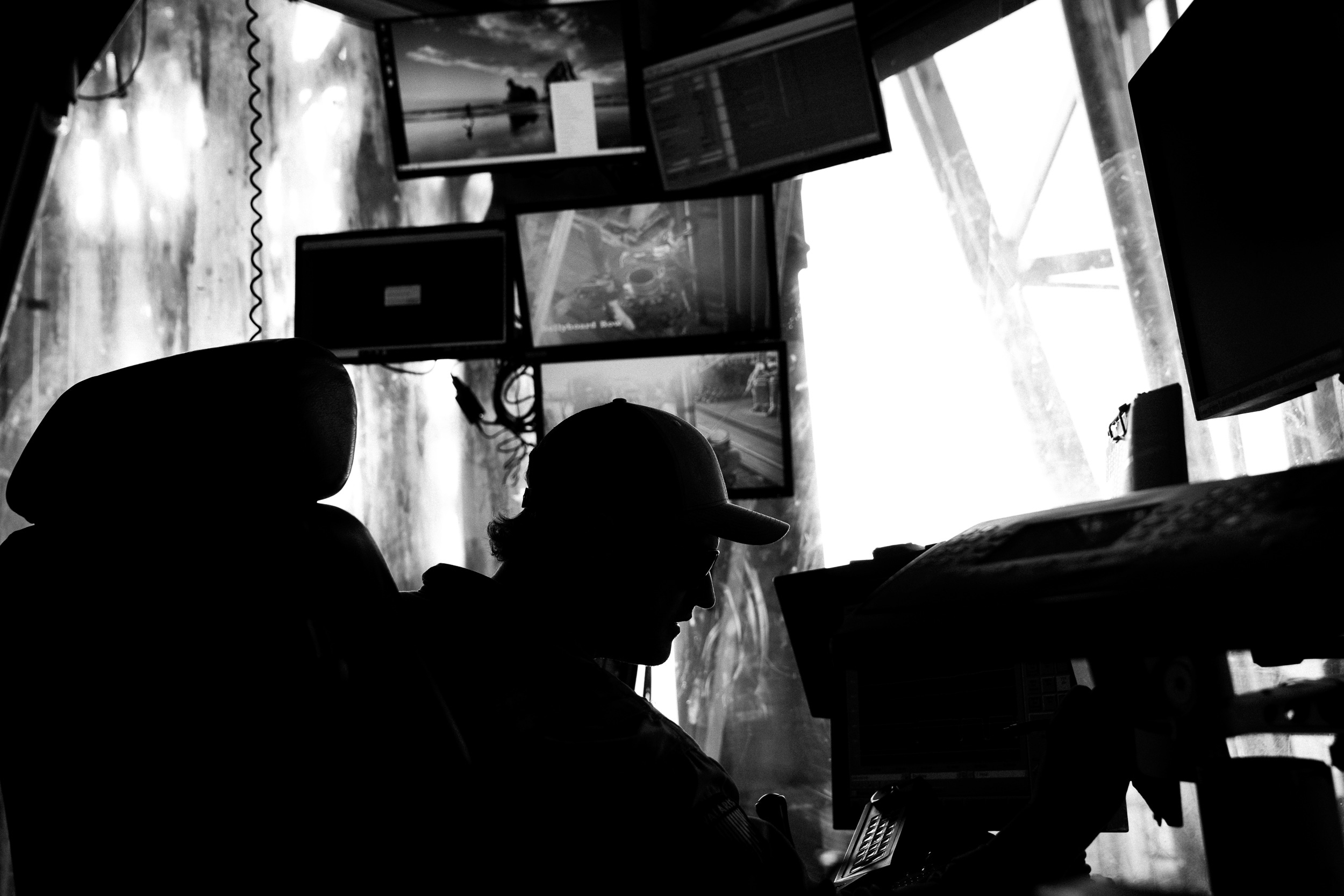
I’m Justin. Twenty years on rigs. Driller by trade. Father and photographer by choice. I write about offshore life because the people in this industry deserve to have their story told by someone who actually lives it.
The Driller’s Digest is free. If you want to support it, I’m grateful for that. But honestly, the fact that you took time out of your day to read something I wrote on a page is enough. I hope some of this is relatable to you, wherever you are, whatever chair you’re sitting in.
Thanks for being here.
Ah the shower floor. An old and familiar “friend”. Been there myself a couple of times.
I applaud you for being brave enough to speak about what it feels like and how that breaking point comes about. And a huge pat on the back for being willing to do the work to seal that crack and remove the damn cork that keeps it all inside. That’s the hard bit.
Proud of you sir, takes serious guts to write what we have all experienced before in one form or another, you saw an issue, and you got help, that is to be commended, seriously proud of your courage to speak out about something that everyone will have to wrestle with at some point in their lives, keep up the great work.